Lot Survey in {{CITY}}, {{STATE}}

Residential Closing & Mortgage Surveys for {{COUNTY}} County

Lot surveys and closing surveys for home buyers, sellers, and lenders, from our licensed surveyors serving {{COUNTY}} County and the surrounding areas of {{STATE}}. Confirm your property lines before closing.

01
About

What is a Lot Survey?

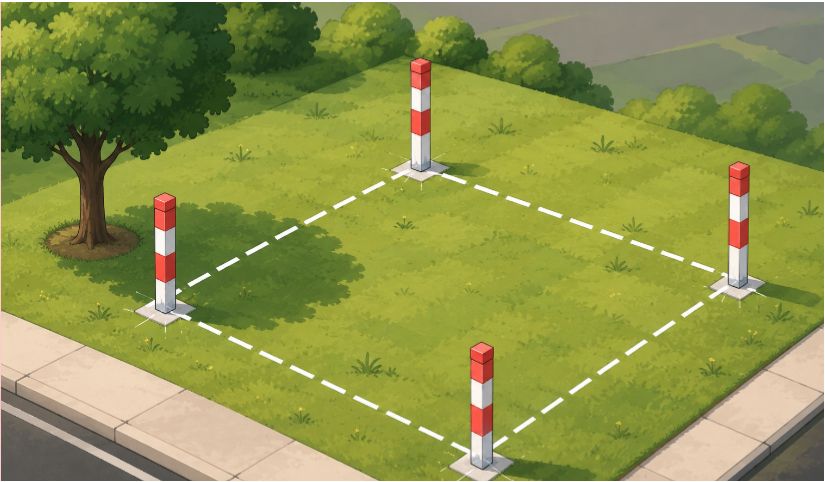
A lot survey - also known as a closing survey or mortgage survey - is a survey of a platted lot within a recorded subdivision. It is typically done at the request of banks, realtors, attorneys, and title companies prior to a loan closing. A licensed surveyor finds or resets the property corners, identifies any encroachments or easements, and produces a certified survey plat showing the results.

A lot survey provides assurance to the lender and buyer that the property being purchased is what has been represented by the seller. For most homeowners, a residential lot survey is one of the most important types of surveys since your home is typically your largest lifetime investment.

Lot survey is the final check before closing, confirming property lines, corner monuments, encroachments & easements on your lot before you sign the paperwork.

Staked property corners on a platted residential lot
02
When You Need One

When Do You Need a Lot Survey in {{CITY}}?

A lot survey is needed in several common situations for property owners and buyers in {{COUNTY}} County. If any of these apply to you, a licensed surveyor can help.

Buying a Home

Many mortgage lenders require a lot survey or property survey before approving a loan. A land survey for a home purchase confirms property lines, corner monuments, and structures before closing - protecting the lender's investment and the buyer's purchase.

Selling a Home

Having a current lot survey ready can smooth the closing process and prevent deal delays. Buyers, lenders, and title companies in {{STATE}} may request a survey before approving the transaction.

Refinancing Your Mortgage

Many lenders require an updated property survey when refinancing. If the existing survey is outdated or if improvements have been made to the property, a new lot survey confirms current conditions for the lender.

Title Insurance Requirements

Title companies may require a lot survey before issuing title insurance. The survey identifies any encroachments, easements, or boundary issues that could affect the title policy and the insurability of the property.

Resolving Encroachments

A lot survey reveals whether a neighbor's fence, driveway, or structure crosses your property line - or whether your structures cross theirs. The certified survey plat provides documentation to resolve the encroachment before or after closing.

Building on a Subdivision Lot

If you are building a home, addition, fence, or shed on a platted lot, a lot survey confirms the property boundaries and ensures the new structure complies with setback requirements in {{COUNTY}} County.

Call {{PHONE}}

Not sure if you need a lot survey? Call {{PHONE}} and we'll help you figure it out.

03
Comparison

Lot Survey vs Boundary Survey

Lot Survey

  • Platted lot in a recorded subdivision
  • Lot and block legal description
  • Typically ordered for mortgage closings

Boundary Survey

  • Any property type - platted or unplatted
  • May use metes and bounds legal desc.
  • Used for fences, disputes, building permits

A lot survey is a specific type of boundary survey performed on a platted lot within a recorded subdivision. The legal description references the lot number, block, subdivision name, and plat book - for example: "Lot 5, Block 2 of the South Subdivision as recorded in Plat Book 21, Page 33."

A boundary survey is the broader term covering any property, including platted lots, metes and bounds parcels, and acreage. The legal description may use bearings and distances rather than lot and block references. In practice, a lot survey IS a boundary survey - the main difference is the type of legal description used.

Not sure which survey you need? Call {{PHONE}} and we'll help you figure it out.

04
What You Receive

What is Included in a Lot Survey?

When your lot survey is complete, you receive a certified survey plat (drawing) that provides a clear, accurate representation of your property. Here's what's typically included:

Property Corners Found or Reset

Property corners are located in the field. Missing corners are reset with an iron pin and cap bearing the surveyor's registration number.

Boundary Lines and Dimensions

Exact bearings and distances for each lot line, showing the dimensions as recorded on the subdivision plat for {{COUNTY}} County.

Encroachments Identified

Any encroachments - fences, driveways, or structures crossing property lines - are identified and shown on the survey plat.

Easements Shown

Recorded easements for utilities, drainage, and access are plotted on the plat so you know exactly where they are.

Legal Description

A certified legal description referencing the lot, block, subdivision name, and plat book location in {{COUNTY}} County records.

Certified and Sealed

The survey plat is signed and sealed by a licensed {{STATE}} surveyor - acceptable for lenders, title companies, and permitting offices.

05
Cost

How Much Does a Lot Survey Cost in {{CITY}}?

Lot survey costs vary based on the size and shape of the lot, the subdivision records, and whether the property corners are still in place. A lot in a recently recorded subdivision with its corner monuments intact is usually more straightforward than a lot in an older subdivision where corners are missing or the records conflict.

Factors that affect the cost include the number of corners to find or reset, the improvements to be shown, fences or structures near the lot lines, recorded easements, vegetation and site access, and any survey requirements from your lender or title company. Rush service is available for closing deadlines, though a compressed schedule can add to the cost.

To get an accurate quote, call {{PHONE}} or send us:

  • The property address or parcel ID
  • The purpose of the survey, such as a home purchase, a refinance, or a new fence or addition
  • Your closing date or any other deadline
  • The title commitment and any survey requirements from your lender or title company, if you have them
  • Your deed and any prior survey or recorded plat, if you have them

06
Service Areas

Lot Survey Service Areas in {{CITY}}

Our licensed surveyors serve property owners, lenders, and real estate professionals throughout {{COUNTY}} County and the surrounding areas of {{STATE}}.

  • {{AREAS_SRV[0]}}
  • {{AREAS_SRV[1]}}
  • {{AREAS_SRV[2]}}
  • {{AREAS_SRV[3]}}
  • {{AREAS_SRV[4]}}
  • {{AREAS_SRV[5]}}
  • {{AREAS_SRV[6]}}
  • {{AREAS_SRV[7]}}
  • {{AREAS_SRV[8]}}
  • {{AREAS_SRV[9]}}
  • {{AREAS_SRV[10]}}
  • {{AREAS_SRV[11]}}
{{COUNTY}} COUNTYCounty-Wide Coverage
{{STATE}}Licensed Surveyors
2026ALTA/NSPS Compliant
Call {{PHONE}}
07
FAQs

Lot Survey FAQs in {{CITY}}

A lot survey, often called a closing survey or mortgage survey in real estate contexts, is a survey of a platted lot within a recorded subdivision. It generally focuses on locating the lot boundaries and corner monuments and identifying relevant improvements, encroachments, easements, and other information needed for a transaction or property-related purpose.

A lot survey is a type of boundary survey performed on a platted subdivision lot. The distinction is mainly the property context and legal description. A broader boundary survey can apply to many types of property, including acreage and metes-and-bounds parcels, while a lot survey normally references a recorded subdivision, lot, block, and plat.

A mortgage or closing survey is a term used in some real estate transactions for a survey prepared to document a property's location, boundaries, corners, and relevant improvements for a lender or closing process. The exact scope varies by lender, title company, jurisdiction, and surveyor. Buyers should confirm what the transaction team actually requires rather than relying on the name alone.

Lot survey pricing depends on the lot size, subdivision records, age and availability of monuments, improvements, easements, encroachments, access, and the level of research required. A straightforward platted residential lot is often less complex than a large or irregular parcel, but there is no universal price. A specific quote is the best way to determine cost.

We respond to survey inquiries within 2-3 business days. A straightforward lot survey is often completed in about two to three weeks from authorization, depending on our current schedule and the availability of property records and field access. Older subdivisions, missing monuments, complicated title information, encroachments, or an accelerated closing can extend the timeline.

A lot or closing survey may be requested by the buyer, seller, lender, title company, attorney, or another party involved in the transaction. The person responsible for paying for the survey should confirm the required scope before the fieldwork begins.

A lot-and-block legal description identifies a property by its lot number, block number, subdivision name, and the recorded plat information where the subdivision was established. It differs from a metes-and-bounds description, which describes the parcel using bearings, distances, and other boundary calls.

A survey may be required by a lender, title company, contract, or local requirement, and even when it is not mandatory, it can help identify boundary or improvement issues before closing. A current survey can provide useful information about property lines, corner monuments, encroachments, and visible improvements. The transaction team should confirm what type of survey is required.

The deliverable is typically a survey plat or drawing that shows the surveyed lot, property boundaries, corner monuments, dimensions, and relevant improvements or other features included in the scope. A signed and sealed survey may also be provided when required by the applicable standards or project agreement. We confirm the exact deliverable with you before the fieldwork begins.

Yes. Our lot and closing surveys are performed by, or under the responsible charge of, a land surveyor licensed in {{STATE}}. In {{STATE}}, as in every state, the profession is regulated by state law, which sets standards governing land surveying practice. You can verify the license through the appropriate state licensing authority.

Request a land surveying quote

Surveyor with a total station in front of the city skyline

Send us a quick inquiry below for your land surveying needs and we will get back to you within 2-3 business days.

Get a Quote

Or Call us at:{{PHONE}}