Installing a New Fence
Before a new fence goes in, we locate your property corners and stake the line so the posts are set on your side. That helps you avoid building on a neighbor's land or leaving part of your yard outside the fence.
Property Line Staking for Fences in {{COUNTY}} County
Fence surveys for homeowners, builders, and fence contractors, from our licensed surveyors serving {{COUNTY}} County and the surrounding areas of {{STATE}}. Know where your property line is before the first post goes in.
A fence survey is a boundary survey focused on the line where your fence will go. Our licensed surveyor reviews your deed and the recorded plat, locates the corner monuments (often called property pins or property markers) in the field, and marks the property line with wooden stakes and flagging so you and your fence contractor can see exactly where it runs.
Staking the line before construction helps keep the fence on your side of the property line, so it does not encroach on a neighbor's land or leave part of your yard outside the fence. It also gives you a clear record of where the line is if a question about the fence comes up later, which helps prevent property line disputes.
Old fences, hedges, and online parcel maps are not reliable property lines. A fence survey shows you where the line actually is before the posts go in.
A fence survey is a good idea any time a fence will be built on or near a property line. If any of these apply to you in {{COUNTY}} County, our licensed surveyors can help.
Before a new fence goes in, we locate your property corners and stake the line so the posts are set on your side. That helps you avoid building on a neighbor's land or leaving part of your yard outside the fence.
An existing fence is not always on the property line. Before you tear out and replace an old fence, a fence survey confirms where the line actually is, so the new fence does not repeat an old mistake.
If you and a neighbor disagree about where a fence belongs, a survey by a licensed land surveyor gives you both a professional reference for the property line. For legal questions about a boundary dispute, consult your attorney.
Some permit offices and homeowners associations ask for a survey or site plan showing where a fence will be placed. Check the requirements with the local permit office in {{CITY}} and your HOA before you build.
Pool fences often have their own height and gate requirements under local code, and a pool fence near the property line still has to stay on your side of it. A fence survey marks the line so the pool fence can be laid out correctly.
On larger parcels, corners can be far apart, hidden in brush, or missing. We recover or reset the corners and stake the line across open land or tree cover, so long runs of farm, ranch, or privacy fencing follow the property line.
Not sure if you need a fence survey in {{CITY}}? Call {{PHONE}} and we'll help you figure it out.
A fence survey combines records research, precise field measurements, and line staking so you can see where your property line runs before construction starts. Here's how the process works from start to finish:
Your deed, the recorded plat, prior surveys, and public records are reviewed to understand the legal description and the corner monuments called for along the fence line.
A licensed surveyor visits the property to locate the corner monuments and measure the boundary lines using GPS and total station equipment. Missing or disturbed corners can be reset.
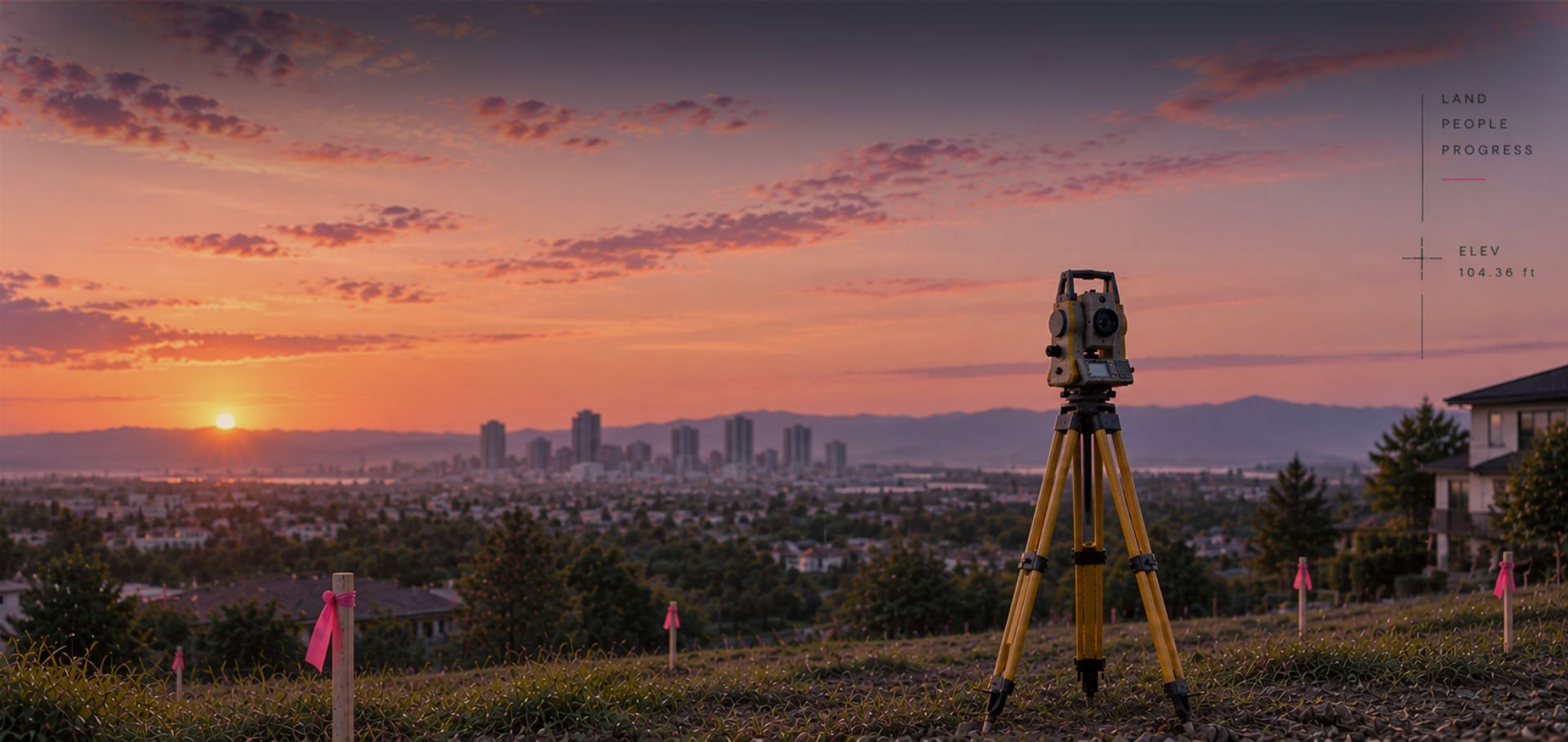
The property line is marked on the ground with wooden stakes and flagging at the corners and along the fence line, so you and your fence contractor can see where it runs.
You receive a survey drawing showing the property lines, the corners found or set, and the staked line, along with any easements or visible encroachments identified.
When your fence survey is complete, the line is marked on the ground and you have a drawing to keep with your property records. The exact details depend on the property and the scope, but a typical fence survey includes:
Property corners along the fence line are located in the field. Missing corners are reset with an iron pin and cap bearing the surveyor's registration number.
Wooden stakes and colored flagging mark the property line between the corners so your fence contractor can set posts along it. The stakes are temporary and are meant to guide construction.
A survey drawing prepared under the responsible charge of a land surveyor licensed in {{STATE}} shows the property lines, the corners found or set, and the staked line.
Recorded utility, drainage, and access easements found in the records are noted along the fence line, so you can check whether a fence is allowed there.
Setback lines shown on the recorded plat are noted, so you can compare the planned fence location with local code and HOA rules in {{COUNTY}} County.
Existing fences, sheds, or other improvements that appear to cross the property line are identified, so they can be addressed before the new fence goes in.
Fence survey costs vary based on the length of the line to be staked, the number of corners, terrain, vegetation, and whether the existing corner monuments can be found. Staking one line on a platted lot with its corners in place is usually more straightforward than staking every line of a large or wooded parcel.
Factors that affect the cost include the property size and shape, how many lines you need staked, missing or disturbed corners that must be reset, the deed and plat records available, existing fences or structures near the line, and site access. Because of these factors, fence surveys are not priced simply by the foot or by the acre. Rush service is available for fence installation schedules, though a compressed schedule can add to the cost.
To get an accurate quote, call {{PHONE}} or send us:
Our licensed surveyors serve property owners, lenders, and real estate professionals throughout {{COUNTY}} County and the surrounding areas of {{STATE}}.

Send us a quick inquiry below for your land surveying needs and we will get back to you within 2-3 business days.
Or Call us at:{{PHONE}}